Lakehurst, 1937
On the evening of May 6, 1937, the largest airship ever built came in over Lakehurst, New Jersey. The Hindenburg was 245 metres long, 804 feet, almost as long as the Titanic, and it was running more than 12 hours late. Headwinds over the Atlantic had pushed its arrival back from 6 a.m. to 6 p.m., and then thunderstorms at Lakehurst kept Captain Pruss waiting over the beaches and coast of New Jersey.
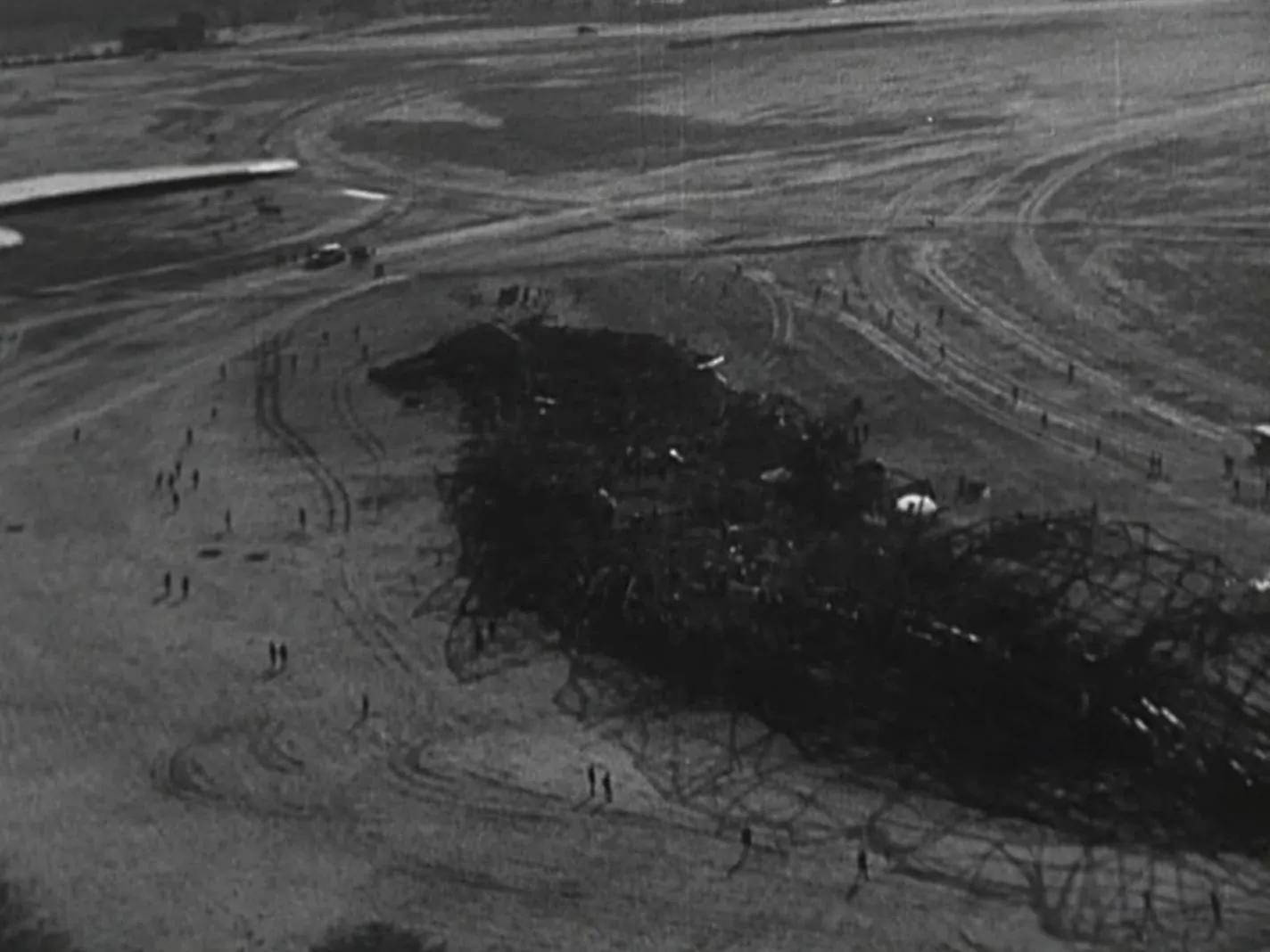
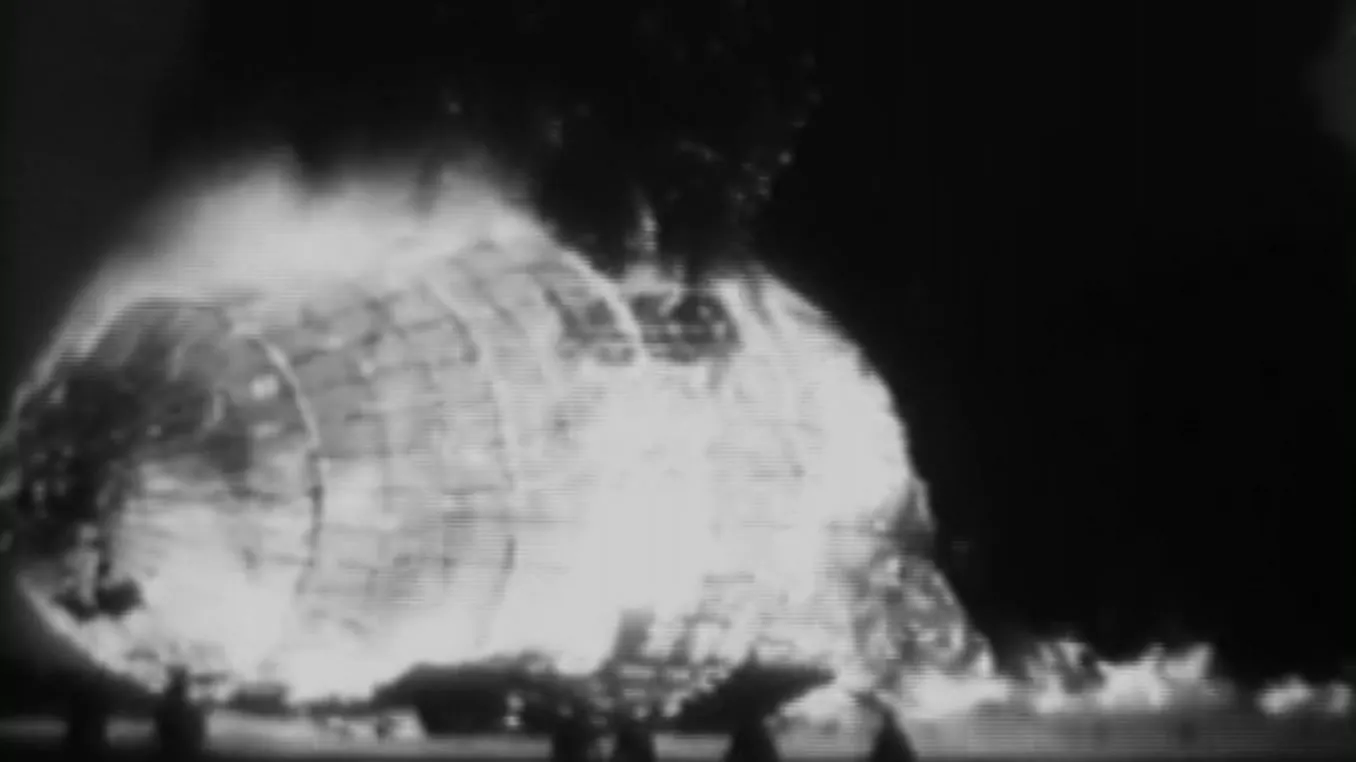
Newsreel cameras were on the field to film the arrival, the ship's first landing in the United States that season. At 7:21 p.m. the forward landing ropes dropped to the ground crew. Four minutes later, a flame appeared on top of the ship, just ahead of the upper tail fin. About half a minute after that, the age of the giant airship was over.
Lighter than air
It had begun on July 2, 1900, when Count Ferdinand von Zeppelin flew his first airship, the LZ-1, from a floating hangar on Lake Constance. His design was the rigid airship: a light metal skeleton covered in fabric, with separate gas cells inside like a row of giant balloons. The Hindenburg's frame was built of duralumin girders, and its 16 cells held 200,000 cubic metres of hydrogen. Each cubic metre of hydrogen lifts a little over a kilogram, so together the gas could lift some 230 tonnes.
That was the trade-off. Hydrogen gives more lift than helium, but it burns. Helium cannot burn, but it was scarce and expensive, and in those years only the United States had it in quantity.
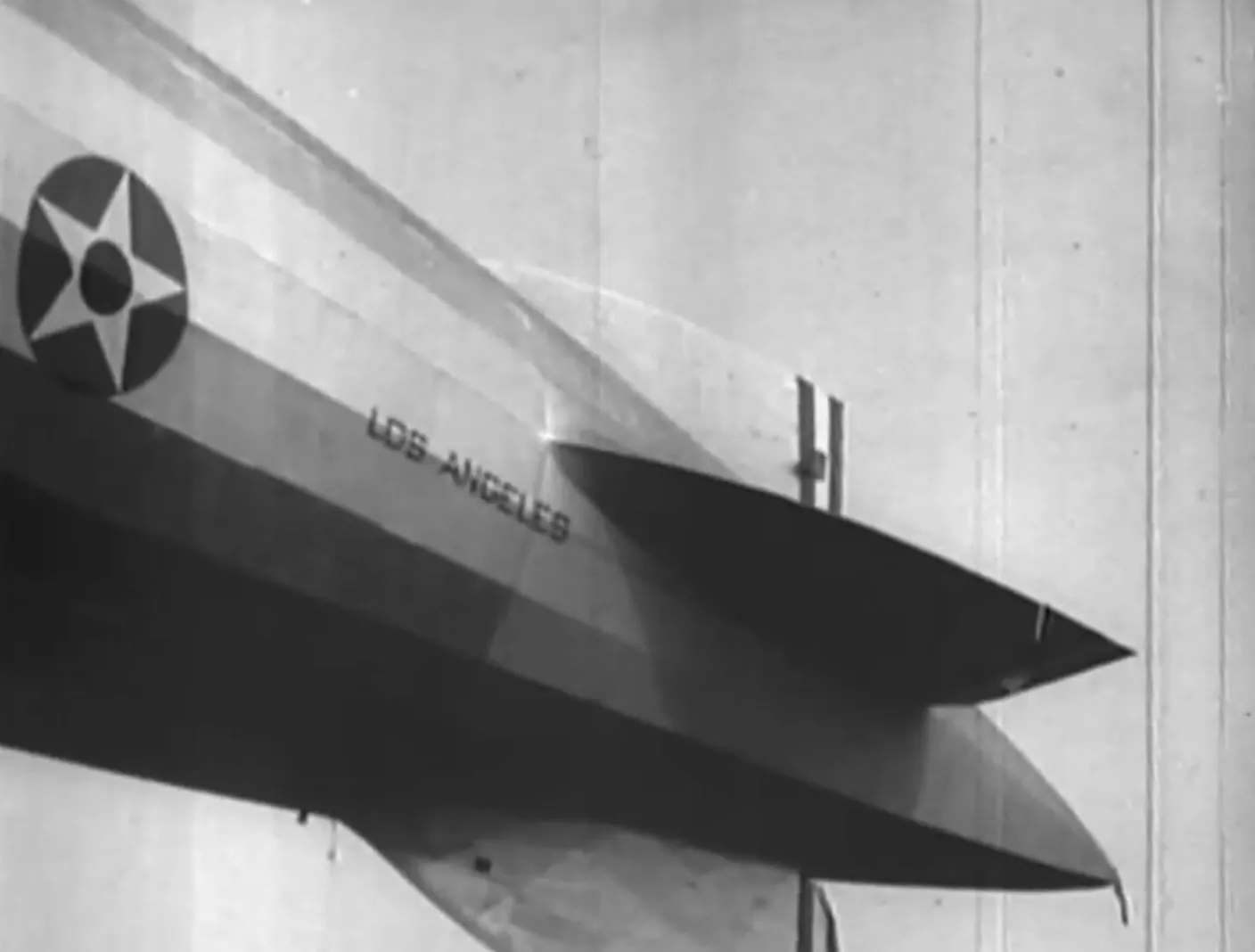
Airships also went to war. In the First World War, zeppelin raids on Britain killed more than 500 people, most of them civilians. After the war, Germany built an airship at Friedrichshafen for the US Navy, its construction partly paid for by German war reparations. It was delivered in October 1924 and commissioned that November as the USS Los Angeles, and the Navy replaced its hydrogen with helium.
Henry Ford built the world's only privately owned mooring mast at his airport in Dearborn, Michigan, in 1925. The Los Angeles tied up there in October 1926, and after that the mast was never used again.
Around the world
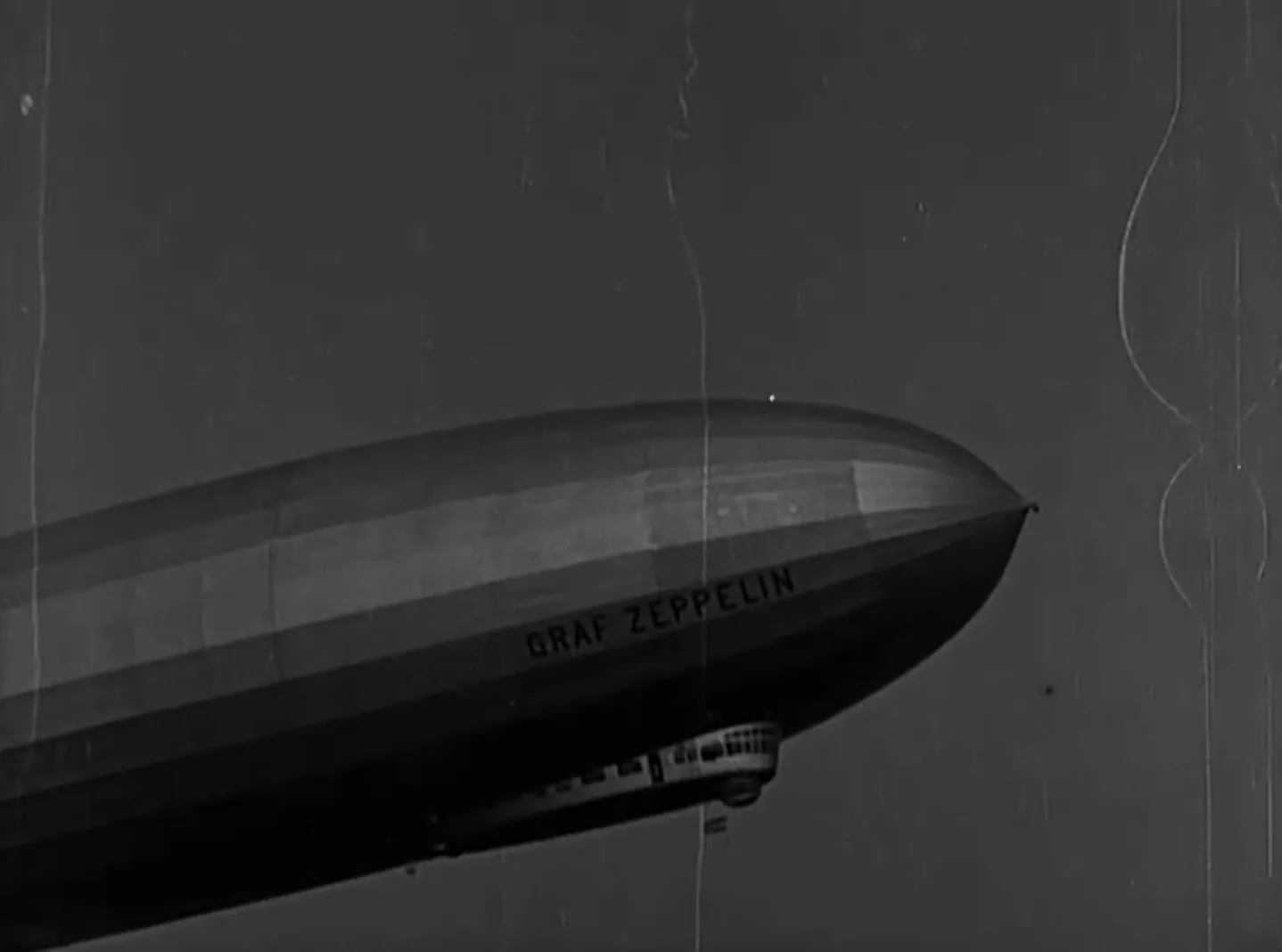
On October 15, 1928, the Graf Zeppelin landed at Lakehurst after 111 hours and 44 minutes in the air from Germany. It was the first commercial passenger flight across the Atlantic. On the way, a squall line had torn away the covering of one of its fins, and a team of four men repaired it in flight.
The next summer it flew around the world, a voyage partly sponsored by the newspaper publisher William Randolph Hearst, who put correspondents on board. The longest leg ran nonstop from Friedrichshafen over Siberia to Tokyo: 11,247 kilometres in 101 hours and 49 minutes. In Japan a crowd of perhaps 250,000 came to welcome it. From Tokyo it made the first nonstop flight across the Pacific, to Los Angeles, and then flew on to Lakehurst. From Lakehurst back to Lakehurst, the trip took 21 days, 5 hours and 31 minutes, 12 days of them in the air.
Over its career the Graf Zeppelin flew more than a million miles on 590 flights, every one of them lifted by hydrogen. In America, the Navy had helium, and a bolder idea.

Flying aircraft carriers
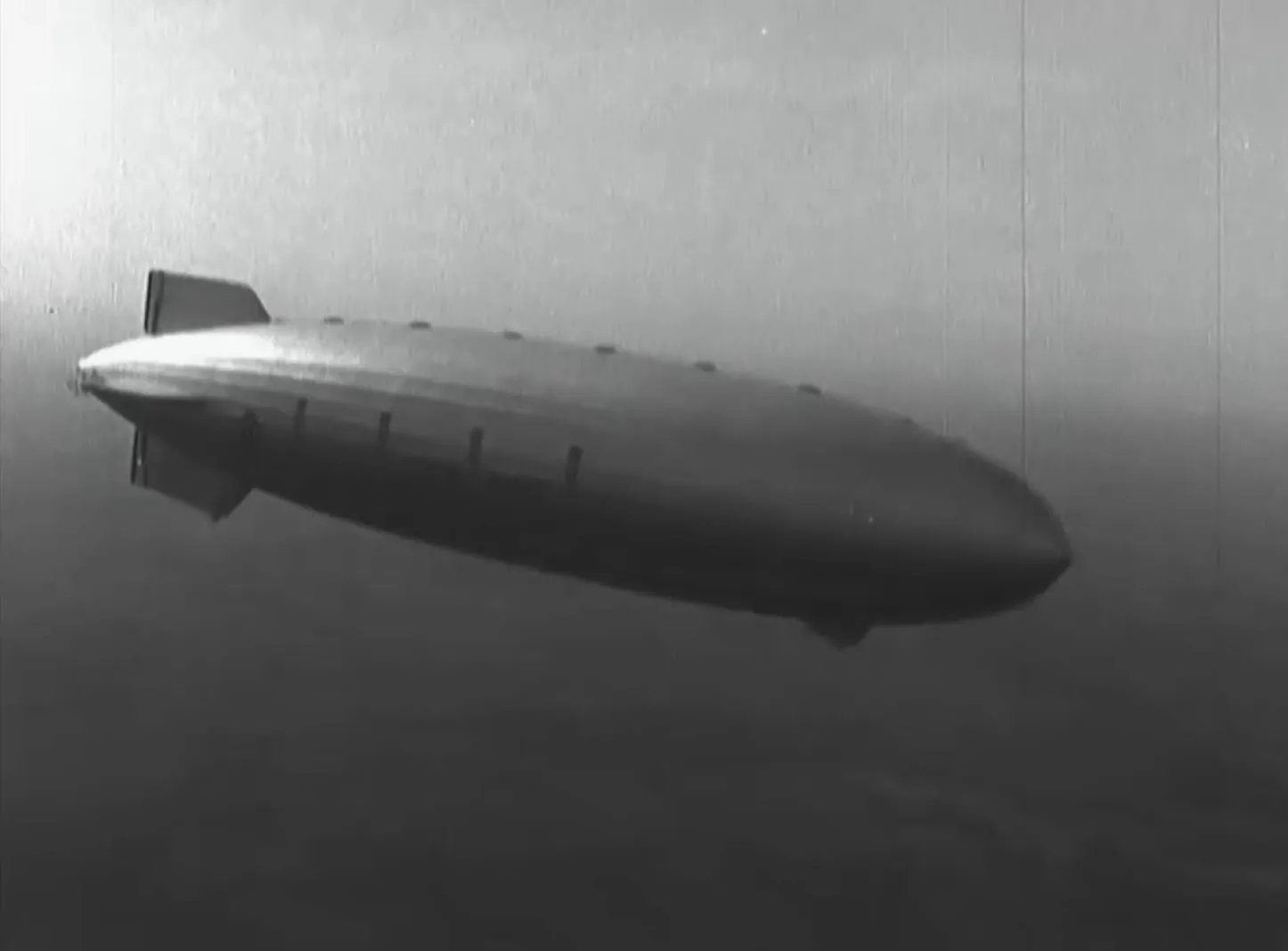
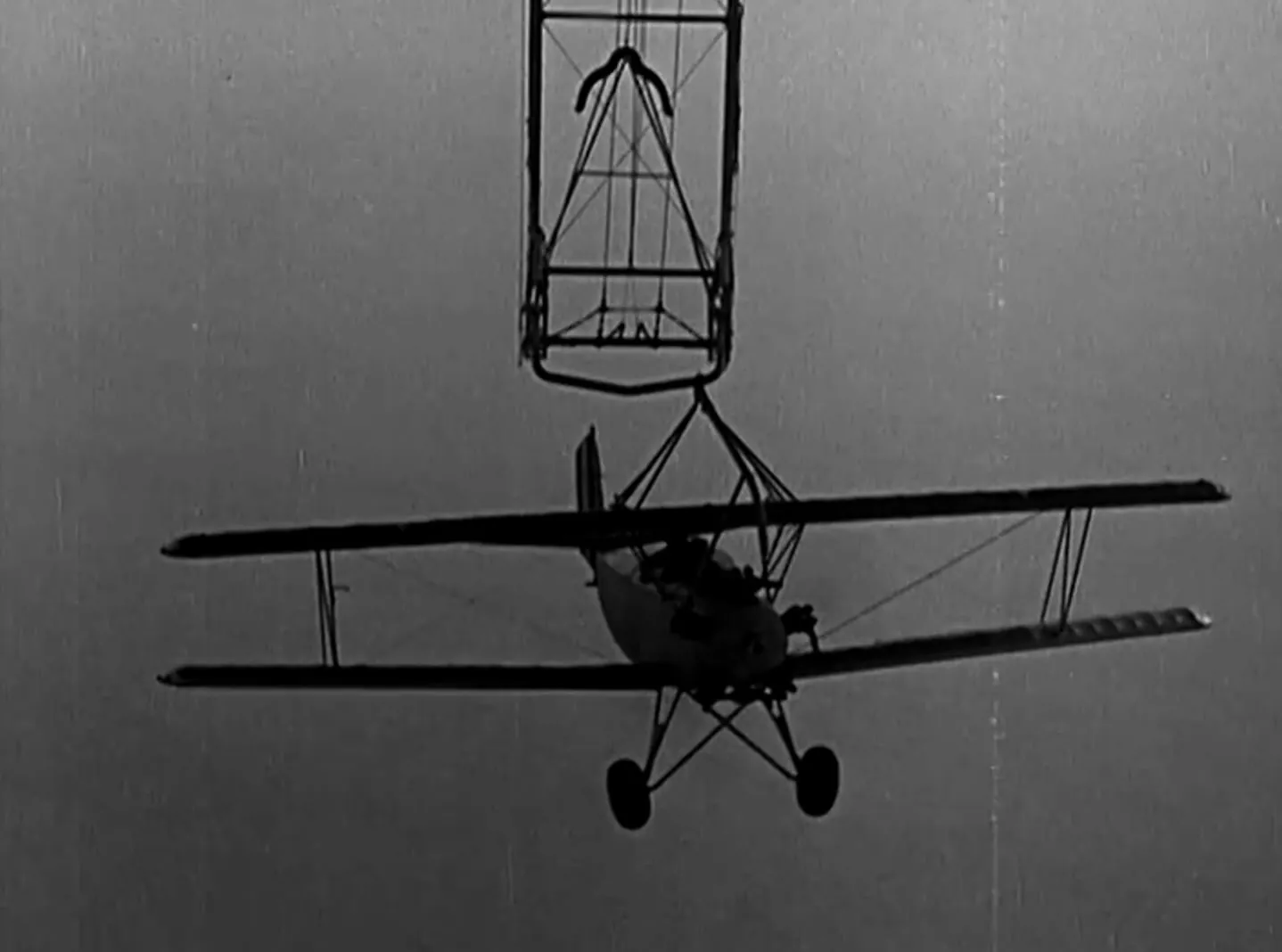
In 1931 the Navy's airship Akron took to the air: 239 metres long, filled with helium, and built to carry planes. Inside was a hangar for small Curtiss Sparrowhawk biplane fighters. A trapeze, lowered through a T-shaped opening in the hangar floor, launched and recovered them: to come aboard, a pilot flew up underneath and caught the bar with a hook on top of his plane. The Akron and its sister ship, the Macon, were the only airships built as flying aircraft carriers, able to carry their own planes and launch and retrieve them in midair: the first and last of their kind.
Even on the ground these giants were hard to handle. In February 1932, at Lakehurst, the Akron's lower fin broke free of its stern beam, the ground-handling car under its tail, and banged into the ground several times.
On the night of April 3, 1933, the Akron flew into a violent storm off the New Jersey coast. The low pressure made its altimeter read as much as several hundred feet too high, and just after midnight the ship crashed tail first into the sea. It carried no life jackets and only one rubber raft. Of the 76 men aboard, 73 died, among them Rear Admiral William Moffett, the head of the Navy's Bureau of Aeronautics. It remains the deadliest airship disaster in history. The blimp J-3, sent out to join the search, crashed in the same storm, and two more men died.
Seventeen days after the Akron was lost, the Macon made its first flight. Based at Sunnyvale, California, it carried life jackets and rafts. On February 12, 1935, in a storm off Point Sur, a sudden updraft broke its upper fin, and it came down in the Pacific. All but two of the 83 men aboard were rescued. It was the Navy's last great airship.
A hotel in the sky
In Germany, the Zeppelin company was planning its greatest ship. Then, on October 5, 1930, Britain's R101 crashed near Beauvais, France, on its first overseas voyage, bound for India. Its leaking hydrogen caught fire, and 48 of the 54 people aboard died. The Zeppelin company changed its plans to a larger ship that could be lifted by helium. But under the Helium Control Act of 1927, America would not export helium, so the Hindenburg was filled with hydrogen.
In May 1936 it became the first airliner to fly a regular scheduled service between Europe and North America. Its fastest crossing, from Lakehurst to Frankfurt that August, took 43 hours and 2 minutes. That year it made ten round trips to North America, carrying about a thousand passengers, at $400 a seat, one way.
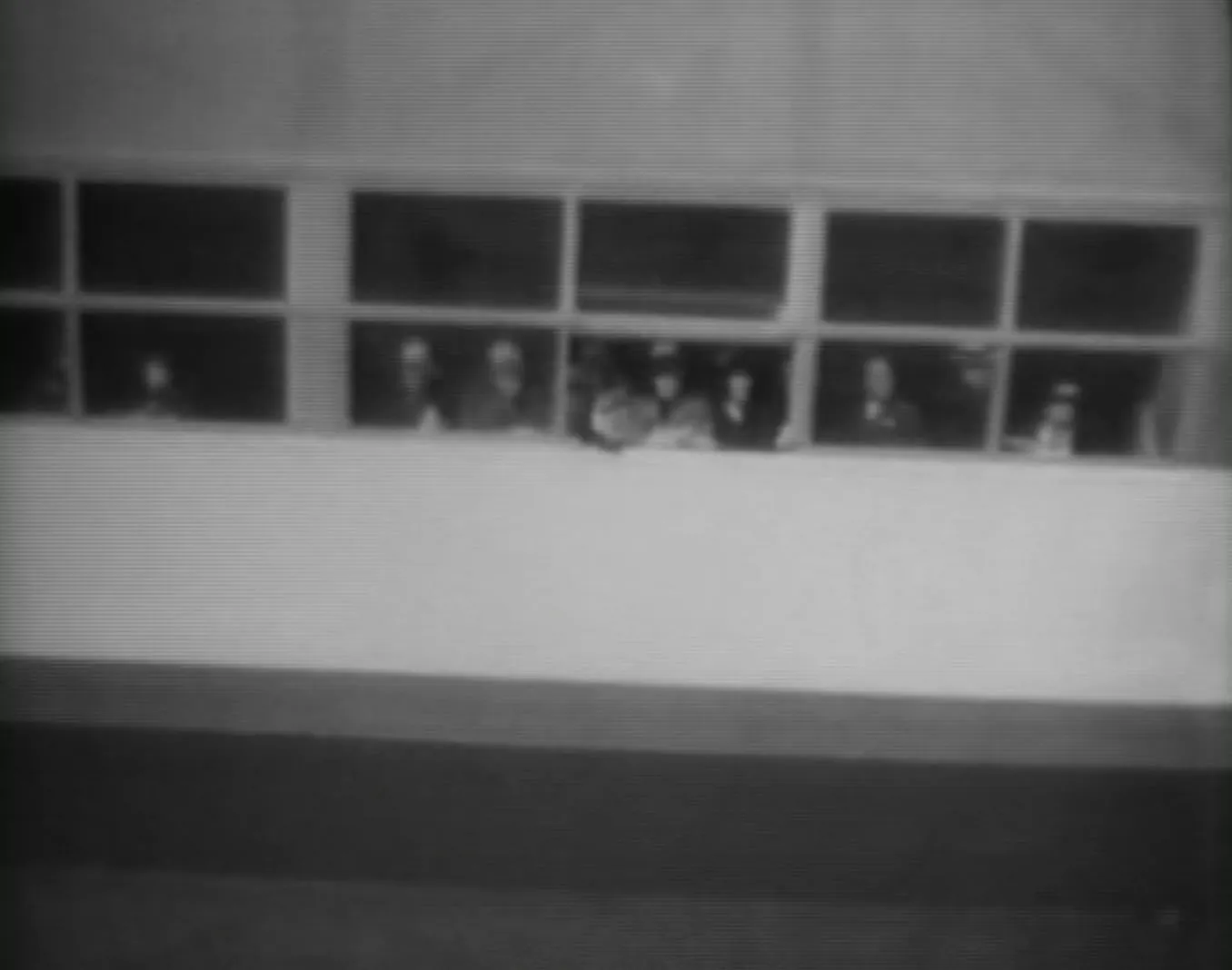
They dined in a room about 14 metres long and strolled along promenades with large windows that could be opened in flight. Down on B Deck, at the bottom of the ship, was something stranger: a smoking room, on a ship full of hydrogen. It was kept at a higher pressure than the rest of the ship, so that leaking hydrogen could not get in, and passengers entered through a double-door airlock. Inside was a single electric lighter, because no open flames were allowed anywhere on board.

Thirty-two seconds
Eighteen round trips between Germany and the United States were scheduled for 1937. The first left Frankfurt on the evening of May 3 with 97 people aboard: 36 passengers and 61 officers and crew. By 3 p.m. on May 6 it was over the skyscrapers of Manhattan, but storms kept it from landing until evening.
At 7:25 p.m., Lakehurst's commanding officer, Charles Rosendahl, saw a burst of flame on top of the ship, just ahead of the upper fin. The tail sank, the nose pointed up at the sky, and the fire raced forward, cell by cell, through 200,000 cubic metres of hydrogen.
People jumped from the promenade windows. Matilde Doehner threw her two young sons from a window and jumped after them, and all three survived. Werner Franz, a 14-year-old cabin boy, was clearing dishes in the officers' mess when a water tank burst above him and soaked him. He kicked open a hatch, dropped to the ground and ran.
On the field, Chief Petty Officer Frederick "Bull" Tobin shouted, "Navy men, stand fast!" The films show the sailors scattering, then turning back and running toward the burning ship to rescue survivors.
The official inquiry estimated that the time from the first glimpse of flame to the ship striking the ground was 32 seconds. Thirty-five of the 97 people aboard died, 13 passengers and 22 crew, and so did one man on the ground, Allen Hagaman. Sixty-two survived. Who lived came down largely to where they were: those who could get out quickly generally lived, ten of the twelve men in the control car survived, and all nine men closest to the bow died.
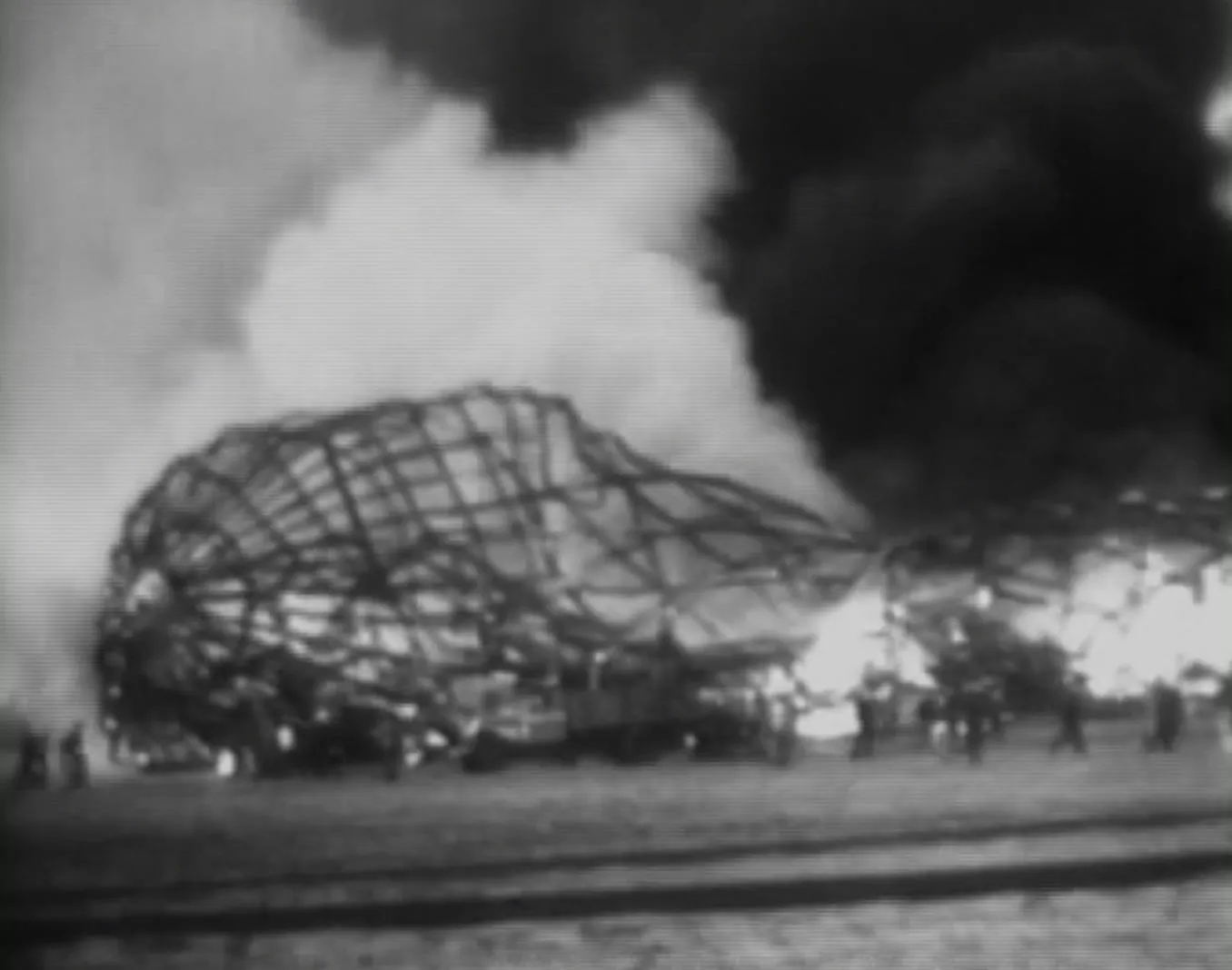
A Chicago radio reporter, Herbert Morrison of WLS, was recording the landing on discs with the engineer Charles Nehlsen. His report, with the words "Oh, the humanity", was not broadcast live: it aired the next day, and it was not paired with the newsreel film until decades later. The crash itself had been caught on film, and within days newsreels of it were showing in cinemas.
Why it burned
The Commerce Department's inquiry found that the fire began when a mixture of hydrogen and air ignited, after hydrogen leaked at or near gas cells 4 and 5, near the stern. It judged that a brush discharge of atmospheric electricity was the most probable spark, and it found no evidence of sabotage.
Today's leading explanation is close to that. The landing ropes had grounded the metal frame, but the fabric cover, in air charged by the storm, could hold a charge, and a spark between the two would have lit the leaking hydrogen. What caused the leak is still unknown.
In 1997 a former NASA scientist, Addison Bain, argued that the doped fabric cover, not the hydrogen, was to blame. The physicist A. J. Dessler did the sums: even if the paint had been solid rocket fuel, it would have burned about 1,000 times too slowly, taking some ten hours to consume the ship. The cover was combustible but not especially flammable, and it burned quite slowly; in photographs of the fire, the only lines of demarcation run between the gas cells, because it was primarily the hydrogen that was burning.
Two days after Lakehurst, the Graf Zeppelin landed at Friedrichshafen. It never carried a paying passenger again. The Hindenburg's sister ship, LZ-130, first flew on September 14, 1938, but the United States would not sell Germany helium, and it never carried a paying passenger either. It was the last large rigid airship ever built. In March 1940, on Hermann Goering's orders, both ships were cut up for scrap, and on May 6, 1940, three years to the day after Lakehurst, military demolition teams blew up the zeppelin hangars at Frankfurt.
At Lakehurst, a chain outline and a bronze plaque mark where the Hindenburg's control car came down. No larger airship has ever been built.